


Most of my patients are either getting updated Covid shots routinely, or summarily waving them off. Sometimes they stop me mid-sentence as I recommend them, their eyebrows furrowed, with a look of disgust, like I just told them to strike up a match and smoke. I’m done with Covid shots!
On one level I get that. Covid is not what it used to be, and the natural psychology after a pandemic is to move on. Sometimes that includes making 85 year-old public health heroes into fall guys, or revising what actually happened so that it furthers a political ideology. But on another level I think the hocus pocus fear of Covid shots is just that. People are more willing to get a yearly flu shot, which is pretty much the same paradigm. And while I respect people’s decisions not to get another Covid shot, especially if they have had a bad reaction in the past, I also feel compelled to justify the advice most doctors are still giving.
I have personally not had an updated Covid shot yet this season. After some negotiation and consensus-building with my family, and checking the height of the local Covid wave right now, we decided to delay ours until rates get a bit higher here in Philly or when the second holiday wave approaches. I’ll review the numbers real quick, but first, a new analysis published by JAMA about the 2026-2027 Covid shots to examine:

Why get a Covid shot in 2026?!?
This JAMA systematic review (recently published September 2026) pooled 155 studies from August 2025 to June 2026. Very current, though not an RCT.
The bottom line is that updated Covid vaccines roughly halve the risk of serious outcomes, and no new safety concerns turned up.
One caveat applies throughout: no actual data yet exist on the 2026–2027 shot itself. The closest evidence comes from last season’s LP.8.1 vaccine. The authors note that in the present world, XFG and the other variants flying around are still quite similar.
Older adults (65+) still have the highest hospitalization rates and account for about 88% of Covid deaths. This is the population I try hardest to reach. Last season’s shot cut hospitalization risk by 53–59% and ER/urgent care visits by 48%. In terms of how sick people get with Covid, sniffles to hospitalization to death exist along a continuum… so if updated shots are clearly bending the needle in the right direction, it makes sense to me to lessen the severity of Covid illness with an updated shot. Whether that prevents any one individual from ending up really sick is impossible to guess.
In 2024–2025 data, updated shots also reduced ICU admission (57%) and ventilation or death (73%). These are grisly situations. Nursing homes with higher vaccination coverage had fewer hospitalizations, too.
Children aged 9 months to 4 years had 76% fewer ER visits, and ages 5–17 had 56% fewer. I like that trend. Less severe illness.
Immunocompromised people got more modest but real protection, about 32–53% against critical illness.
Health care workers (that’s me) who have had 3–5 doses since this whole thing started were found to have fewer infections (41%) and less long Covid (57%) than those with 2 doses. I’ve lost count, but I think I’ve had seven shots by now.
Safety showed no new signals. The myocarditis risk in young males came from studies before the 2022 change to dosing intervals. Myocarditis with respect to Covid is pretty much just something seen with actual infections now. Getting the Covid and flu shots at the same visit showed no added risk.
Limitations: As stated at the top, nearly all the evidence reviewed is observational, and many studies carried risk of bias. Such is science in real time. Take it or leave it, but try not to be an RCT absolutist.
My personal wager
If it were just up to me, I would have received an updated shot by now… but I’m gaming this out a bit with family. There are usually two waves to hop, and the protection against infection that updated Covid shots provide does decay over months. Here in the northeast the second wave around the holidays is usually the higher one, and we are stuck indoors with closed windows more often because of colder weather. That may be the reason that southern states typically have larger late summer waves, stuck indoors as people are with sweltering heat as they also go back to school late August.
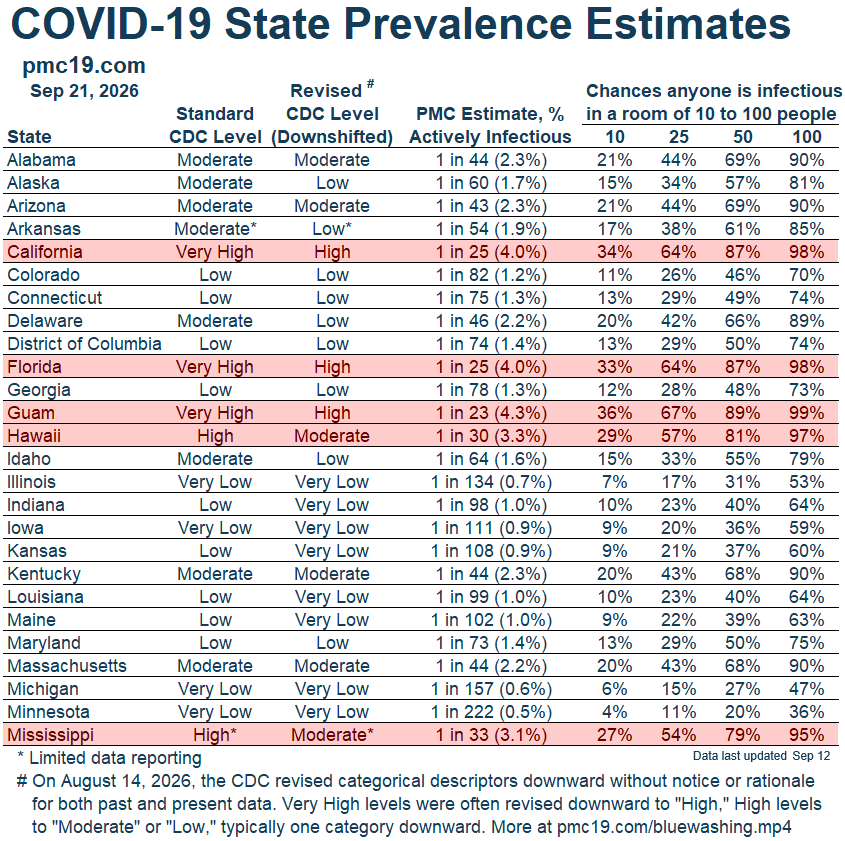
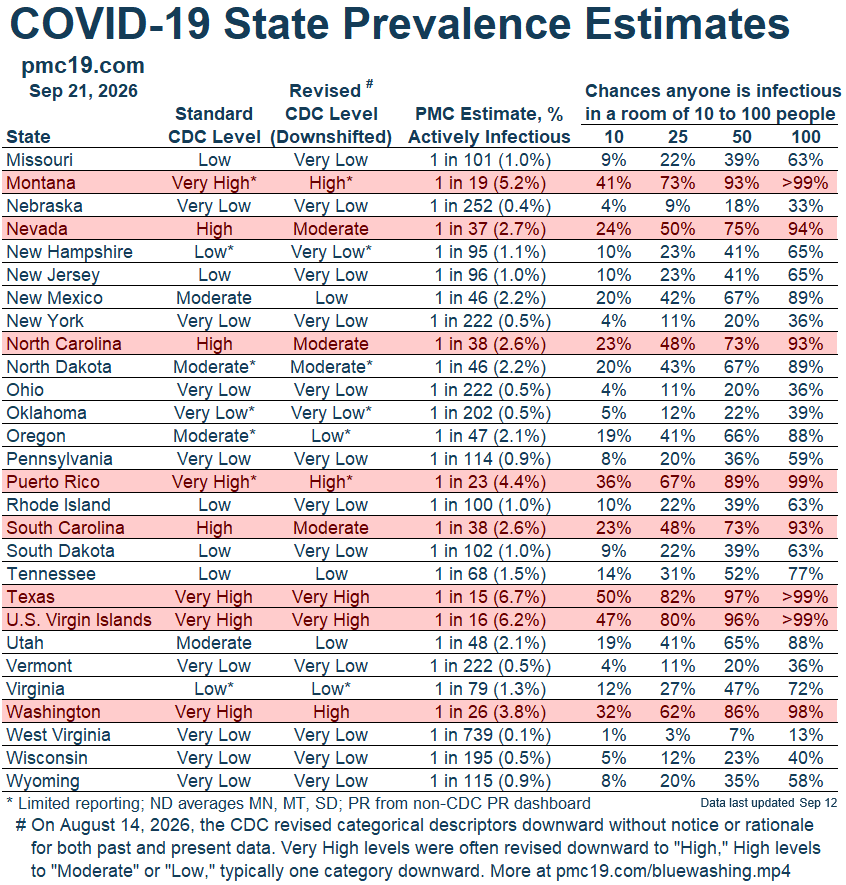
Anyway, here are some pictures and tables that tell a story of the present situation, from Pandemic Mitigation Collaborative and Biobot:
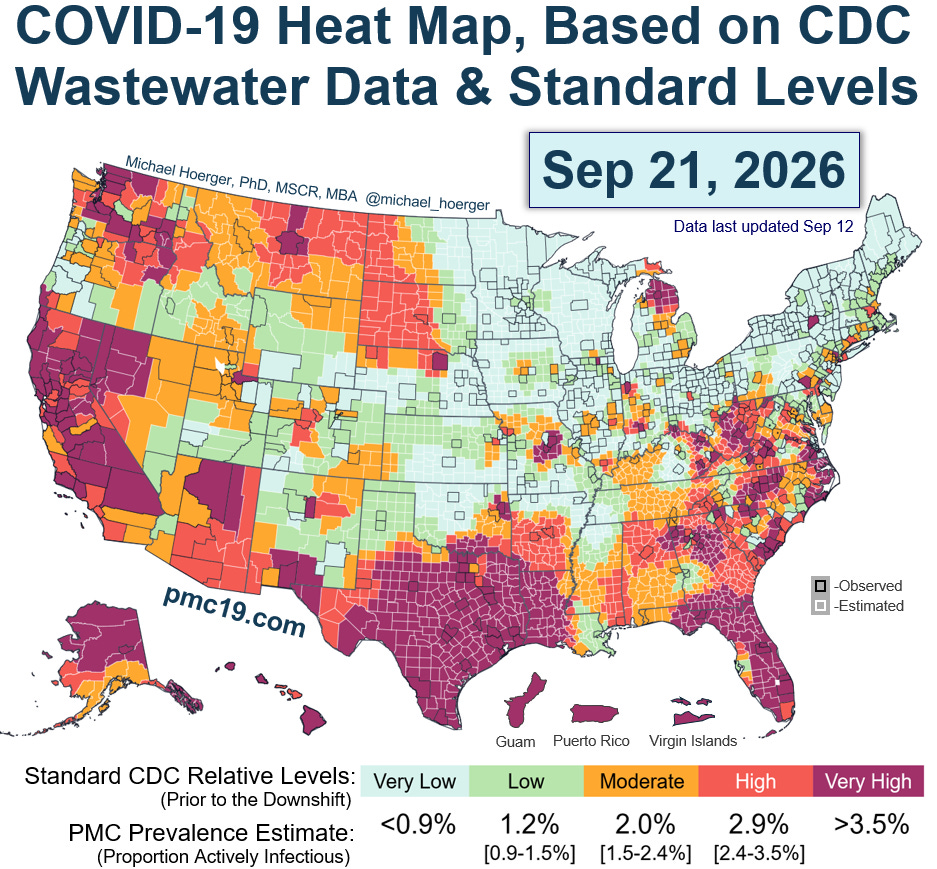
What do you notice about the highest prevalence areas coming off the hot summer weather in the south?
There is a lot of variation by states. Good to know if traveling, too:
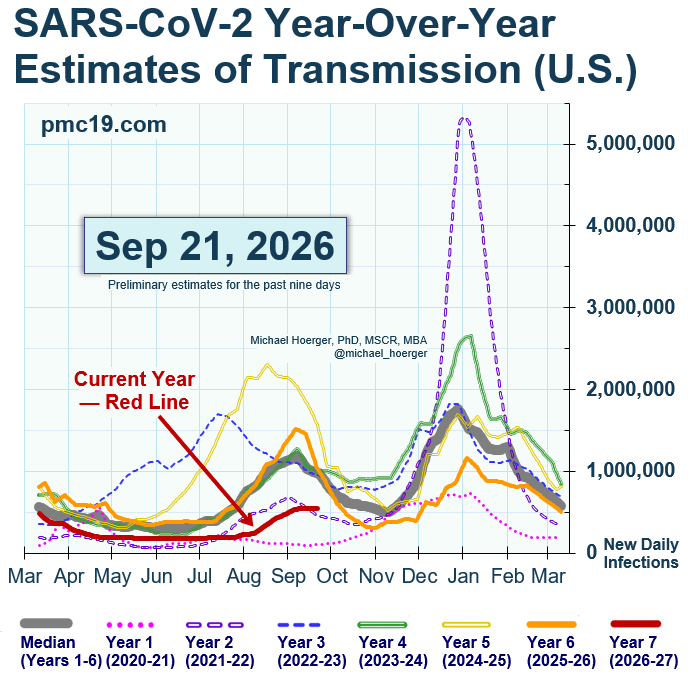
Check out the current year red line below. What do you notice?
Not too shabby as far as waves go, and if we are lucky that line will keep flattening, and might just bend downwards until the holidays approach.
I’m keeping my eye on the orange-ish line below that tracks the Northeast. It just took a jump upwards, so if that keeps bending upwards by next week (and I don’t get Covid from Back to School Night last night!) I might just scrap the family plan and get mine now.
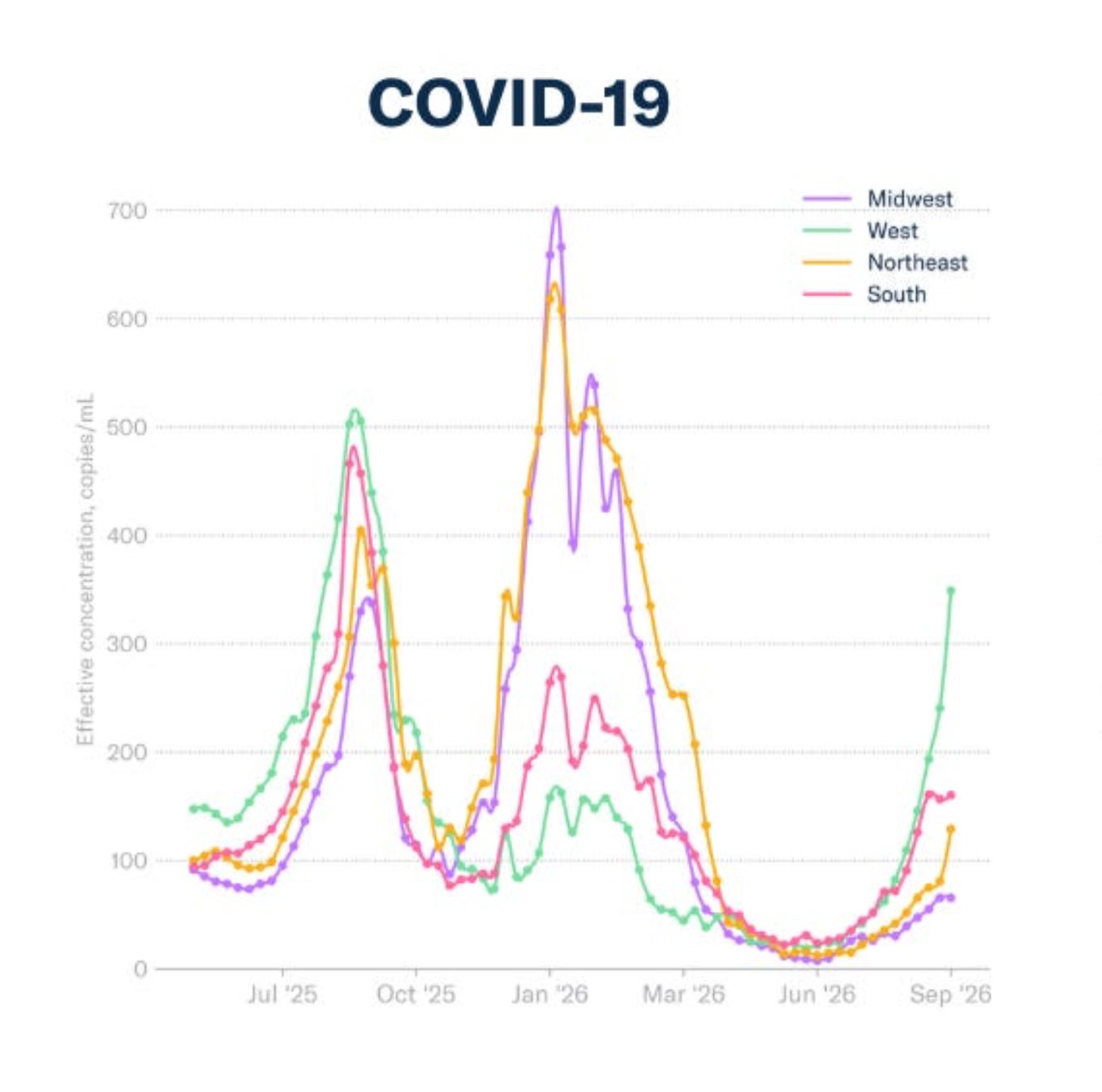
I am not really high risk, except that I work in healthcare, but if I were high risk, I wouldn’t be trying to game this out. I would just do it. Most Americans are high risk for one reason or another, so it’s best to just get that shot if you are down with the benefits as reaffirmed by that JAMA systematic review, and OK with the small risks.
Ok, off to work. Have a good day if you can!
Thanks for your updates. I am 78 years old and have gotten every vaccine or shot available to me. And, guess what, I've stayed healthy.
I got a recent updated Covid vaccine and I realized it is my 14th! Wild, but I was one of the first to get it given I am a physician AND I am almost 70 so I get them 2X a year. I am about to hop on a plane to Europe (N95s in carry on and will be on my face all flight long) so I am risking a December surge. I also got my flu vaccine and again, too early for me but travel is risky.