

Heat wave!
The jarring, unhealthy, sudden arrival of temperatures in the 90's

Philly hit an all-time record yesterday for heat in the month of May, and much of the Mid-Atlantic and Northeast are in for another day of baking. Many of my patients in the office were clocked with temperatures around 99 degrees as they walked in, and I expect much the same today. Our bodies are not ready for this kind of heat yet. It’s dangerous, really, for young, middle aged, and especially older bodies.
One of the most impactful things a clinician can do during a heat wave is simply communicate with people before and during the onslaught. A randomized trial of a preventive-message tool for older adults in Australia demonstrated significant uptake of protective behavioral strategies and a 63% lower risk of self-reported heat stress among those who received the intervention compared with controls. So here we go! I’m banging this out before my first patient comes in at 9 AM looking like “🥵” Much of this post has been informed by this paywalled resource about heat illnesses found in NEJM Evidence.
Here is the forecast for today in the US:
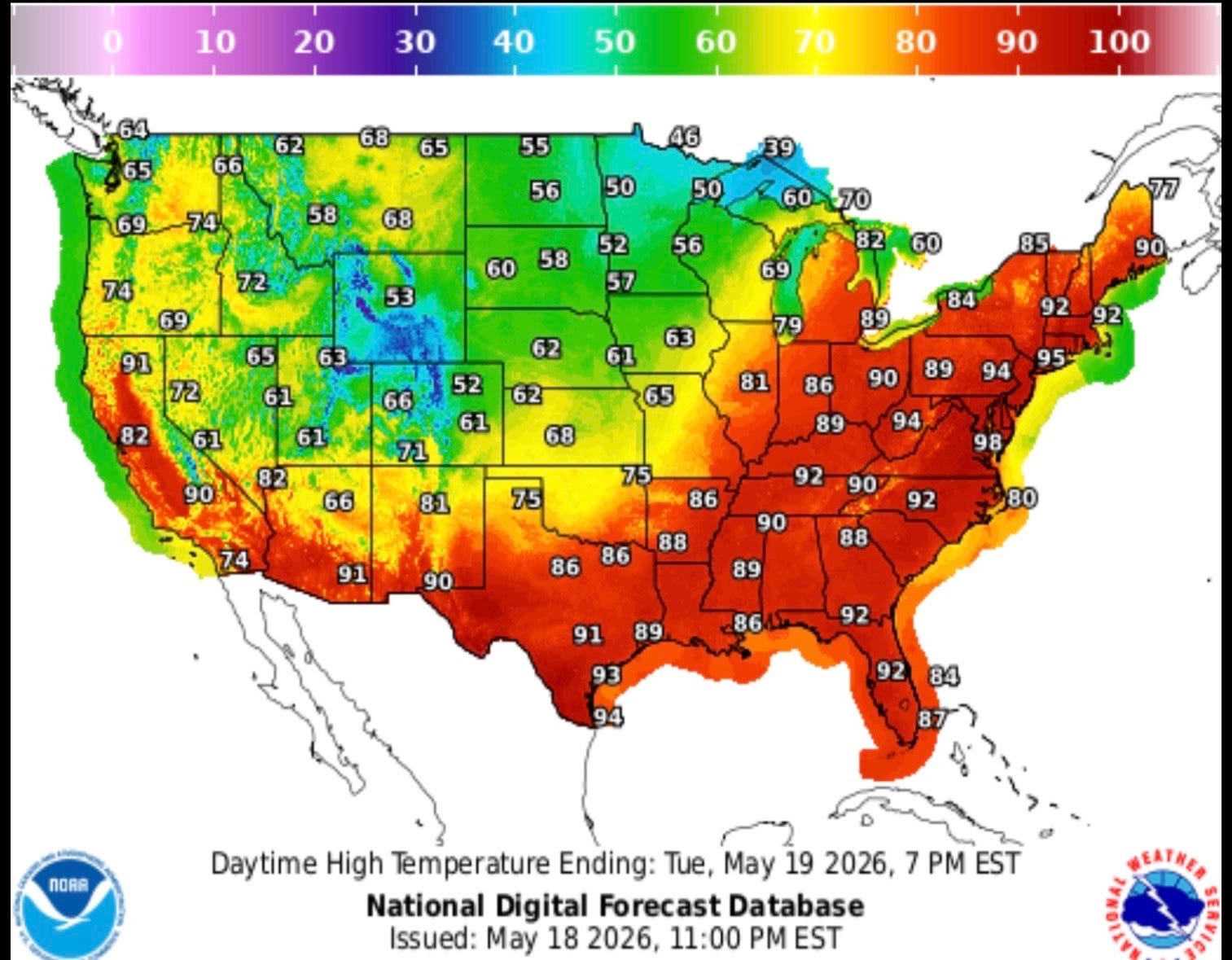
Last week we were were still wearing sweaters, with delightful sleeping weather dipping into the 40’s F. Not now. This is the kind of jump that should worry us more than even the long heat waves of August — not because the air itself is more dangerous, but because none of us have had time to get ready for it.
Heat acclimatization is real, and protective. Given a week or two of graduated exposure, the body adapts. Sweat glands open up the micro-hydrants earlier and produce more sweat at lower core temperatures, plasma blood volume expands, resting heart rate drops, cardiac strain falls. It takes at least one to two weeks of progressive exposure to build… and we are nowhere near that. We are walking into an oven our bodies haven’t been trained for yet this year, and the science is clear that this is when more bad things happen — even to the young and the fit.
A few practical things
Cooling, ranked.
Air conditioning is the single most effective protective factor we have. If you don’t have AC at home, identify a place you can get to like a library, a community center, a mall, a friend’s apartment, even a public cooling center like in the city. Even if you are well off, have a plan in advance. You never know when the AC might fritz out.
Fans help up to about 99°F; above that they can actually accelerate dehydration without cooling us meaningfully. And on humid days, fans work even less.
Cool showers, self-dousing with a wet towel, and misting combined with a fan are all effective and can be repeated through the day.
Pre-cooling before going outside if we have to go there can reduce risk: cold drinks, a cold shower beforehand, a damp shirt, a cooling vest for outdoor work.
Pay attention to humidity, not just temperature. Sweat only cools us if it can evaporate, which is why 90°F at 70% humidity is more dangerous than 95°F in dry air. The number on the thermometer isn’t the whole story.
The WetBulb Globe Temperature is a measure of the heat stress in direct sunlight, which takes into account: temperature, humidity, wind speed, sun angle and cloud cover (solar radiation). This map is wonky but a decent resource.
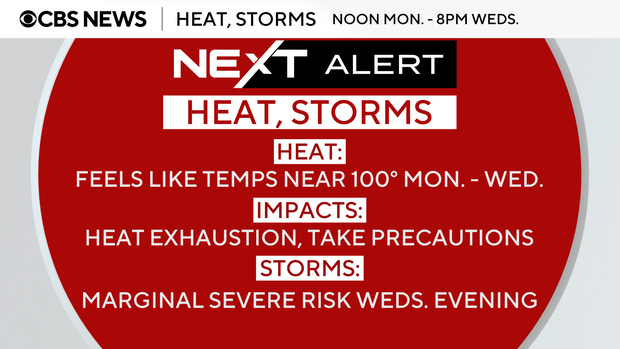
Hydration. For most of the day, plain water is fine. For sustained physical activity longer than an hour, we want a little sodium with our fluid. Sports drinks meet the threshold, and so does a little salty snack plus water. Plain water in very high volumes during long exertion can cause exercise-associated low sodium levels (hyponatremia), which is its own emergency. Don’t wait for thirst as it lags behind dehydration, particularly in older adults, where the sensation is blunted.
Move activity to the edges of the day. Plan outdoor exertion (if needed) before 10 AM and after 4 PM. Think loose, light-colored clothing. Sunscreen (sunburned skin can’t dissipate heat as well). Build in more rest breaks in shade than we think we need, especially if for outdoor workers and athletes practicing after school. The internal pressure to push through is one of the most consistent risk factors for catastrophic heat illness, especially in young athletes; be wary of any environment that frames perseverance as a virtue when bodies are telling people to stop.
If you’ve been recently sick, sit this one out. This is one of the most frequently missed risk factors. Recent febrile illnesses, particularly upper and lower respiratory infections, markedly raise the odds of serious heat illness. If you’ve had a cold, flu, Covid, stomach bug, or any fever in the past week, your thermoregulation is not where it normally is. Skip the workout. Stay in the air conditioning. This applies to children and athletes, too.
Check medications. A number of common medications impair sweating, blunt cardiovascular compensation, or push the body toward dehydration. Many commonly prescribed medications impair thermoregulation and increase heat risk. Patients might discuss their medication list with their clinician before the warm season. With help from Open Evidence I prepared the following quick review of drug classes and their mechanisms:
Dehydration risk: diuretics, laxatives, alcohol
Increased heat production: amphetamines, thyroid hormone replacement, stimulants/supplements (caffeine, creatine, ephedra)
Impaired sweating: anticholinergics (oxybutynin, dicyclomine), first-generation antihistamines (diphenhydramine), topiramate
Impaired cardiovascular compensation: beta-blockers, calcium channel blockers, antiplatelet agents
Disrupted central thermoregulation: antipsychotics, lithium, SSRIs, tricyclic antidepressants, phenothiazines
Reduced alertness to heat: benzodiazepines, alcohol
A study of older Medicare beneficiaries found that use of heat-sensitizing medications was associated with a 16–37% increased risk of heat-related hospitalization even in the absence of heat waves, with heat waves further increasing risk by another 21–33%. This is not a reason to stop any meds — it’s a reason to be more careful this week if you’re in the red zone, and worth a quick word with your clinician if you’re unsure.

Know the warning signs. Heavy sweating, cramps, headache, nausea, dizziness, weakness, a racing heart that doesn’t settle with rest.
Stop, get to a cool place, hydrate. Heat also dulls cognition and reaction time well before more obvious symptoms appear — if you’re driving, operating equipment, or supervising children, the loss of judgment can arrive before you notice it.
The red-flag finding is altered mental status — confusion, slurred speech, irritability, stumbling, agitation. That is heat stroke until proven otherwise, and it is a 911-level emergency.
Cool first, transport second. If you are with someone who has collapsed in the heat or has become confused, call 911, then begin cooling them immediately, before the ambulance arrives. The damage from heat illness is dose-dependent on time spent at high core temperature, and every minute matters. The gold standard is cold-water immersion — a bathtub, a kiddie pool, even a large cooler with ice water — anything that gets the body wet and cold all over. Failing that, cool wet towels rotated every minute or two, ice packs at the neck, armpits, and groin, and aggressive fanning to keep evaporation moving. Do not wait for the hospital to start cooling. This single principle (cool first, transport second) has a larger effect on survival than almost any other intervention in heat illness. More on heat-related illnesses and proper triage.

Check on someone. Call your parents. Knock on your elderly neighbor’s door. The people most likely to die in a heat wave are older adults living alone, and the most consistent predictor of who gets hurt is whether anyone is checking in. For example, a program of phone calls and home visits for adults over age 80 during Rome’s summer heat waves was associated with a proven drop in excess mortality. The intervention is genuinely that simple, and it works.

The forecast will turn cooler in a few days across much of the US.
Until then, treat the week with more caution than the calendar suggests.
Have a cooler heat wave day if you can!
Great, helpful run-down. I have restacked. And I love both versions of your great moon and Venus photo. Good on you for taking time to look up at the night sky—and for having your camera at the ready!
I have always tried to stay up to date on topics like this, but I had absolutely no idea that a gradual build up to heat was so critical. Thank you for always going the extra mile to keep even well-informed people more well-informed.